FX lessons from Brent Donnelly
FX volatility is believed to be the key exhaust valve of Trump’s tariff and trade policy this year
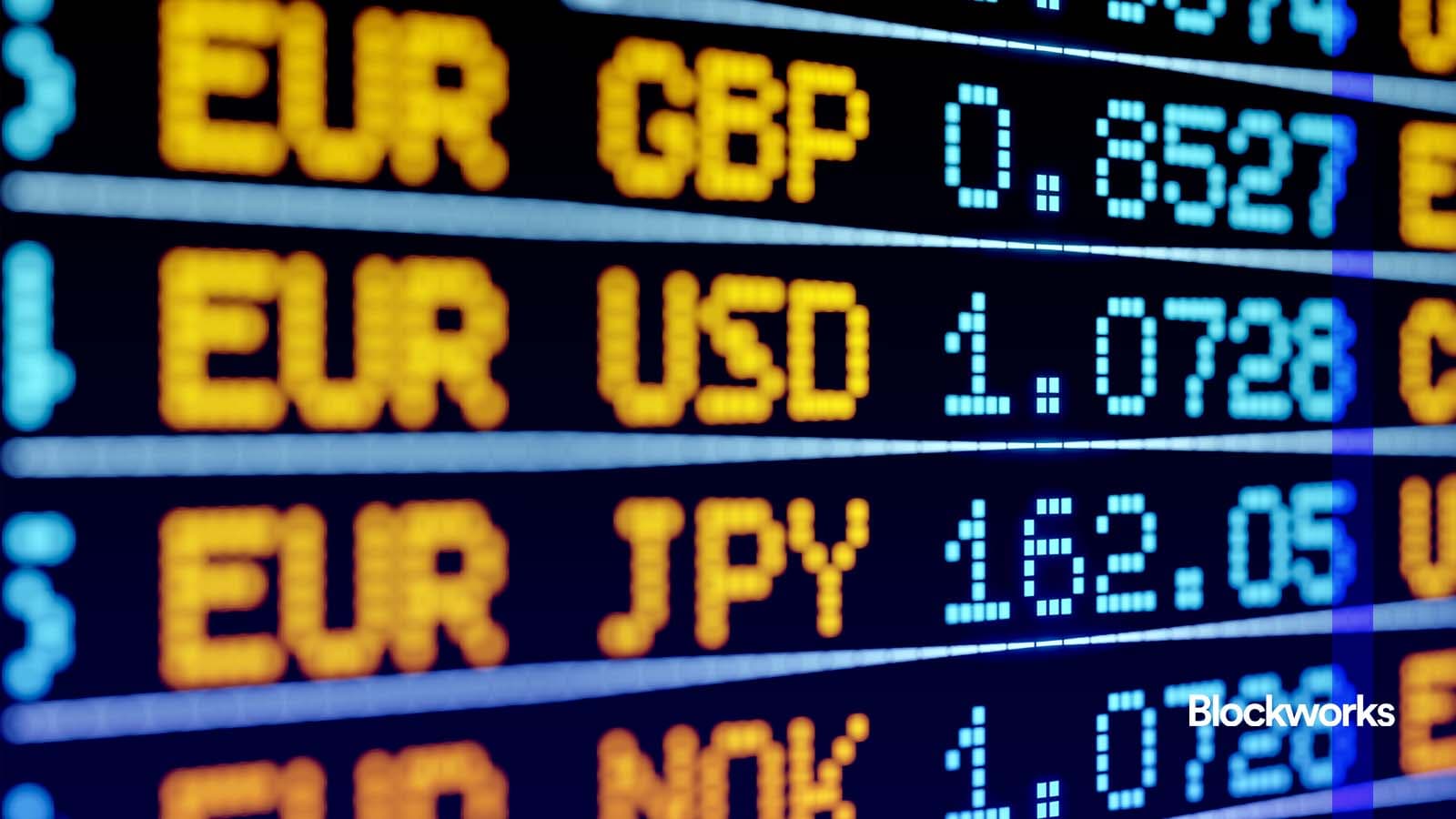
Westlight/Shutterstock modified by Blockworks
This is a segment from the Forward Guidance newsletter. To read full editions, subscribe.
A major thesis I have for 2025 is that FX will be one of the key macro assets to focus on.
The big reason is that FX currencies are the exhaust valve for interest rate differentials between other countries, and therefore tariff implementation since that gets directly imputed into global capital flows that are key drivers of global currencies.
With this belief in FX volatility being the key exhaust valve of Trump’s tariff and trade policy this year, I went ahead and interviewed one of the best macro FX traders I know: Brent Donnelly of Spectra Markets.
Of course, nothing beats watching the full episode, but here are a few of my favorite takeaways:
On how much capital flows drive FX currency:
“The hard thing is that the capital flow stuff kind of happens around the edges. So if you have a good capital flow story, that could be marginally biased in one direction. But if the bigger drivers like rate differentials are pointing in the other direction, it’s not going to work. So capital flows tend to be more of like an accelerant, not a directional driver.”
On how emerging market currencies are mostly driven by carry trades:
“For an EM it’s usually all about the carry. So if you can sell USD and buy Brazil and it goes nowhere for a year, let’s just say you make 10% on that carry. That’s a really good carry trade. So dollar Brazil is going to go up and down. But if you have the view that dollar Brazil is going to go down, it’s kind of a free lunch. So like for two years in Mexico, it was basically a free lunch to own Mexican pesos because reshoring was good and that led to a steady and stable carry trade.”
On the impact of this week’s Bank of Japan rate hike:
“They did a hike recently of 15 basis points and they did one of 20 and now the market’s expecting 25 and 22bps is priced in.
So then the question becomes this: If this hike is priced in, which it is, what are the signals from the central bank at the meeting? They could hike 15 and just say, you know, they are a little bit scared about market stability because they felt like they blew up the world in August. And because of that guidance paired with so much of the hike already being priced into markets, it could end up being a dovish outcome for the meeting.”
There are many more interesting tidbits in the interview, including a deep dive into how Trump’s tariff threats are impacting FX currencies, so I highly recommend checking it out!
Get the news in your inbox. Explore Blockworks newsletters:
- The Breakdown: Decoding crypto and the markets. Daily.
- 0xResearch: Alpha in your inbox. Think like an analyst.